About Profitdrive

The financial thread, restored.

Profitdrive exists because services firms often lose the connection between commercial commitments, delivery reality, and firm profit as they scale.

It restores that thread by connecting pipeline, projects, people, and overhead into one forward-looking commercial model, so leadership can see the financial consequence of decisions before they are locked in.

Why Profitdrive exists

Profit is decided earlier than it is reported.

Most of the moves you make as your firm grows are about activity: expand the pipeline, fill the bench, hire ahead, add a service line. They may all be the right moves. What is hard to see is the profit consequence of each one at the point you decide it, so revenue can grow while margin stays where it was.

As your firm grows past the point where one person makes every call, the decisions that set profit move to different people: sales prices the deal, delivery staffs the project, someone approves the hire. Each works from their own view of what is coming. Finance is left to explain in the monthly report what those choices did to profit, weeks after they were made.

The gap is specific. You need to see the forward profit consequence of a deal, a staffing decision or a project plan at the time you make it. Large firms get that from a finance team, a resource management office and sales operations. A firm that has not built those functions cannot justify them for this alone, so the call gets made on instinct and on what happened last year.

Profitdrive exists to close that gap without building those functions. It connects the funnel, the project plans, the people cost and the overheads in one place, so the outlook comes out of the data your teams already keep, and it moves the day something changes.
Designed from operating experience

Twenty years inside the problem.

The product is shaped by direct operating experience in services firms at scale: the deal reviews, the staffing calls and the monthly forecast rebuilds, seen from the finance and operations side.

Founder portrait
From the founder

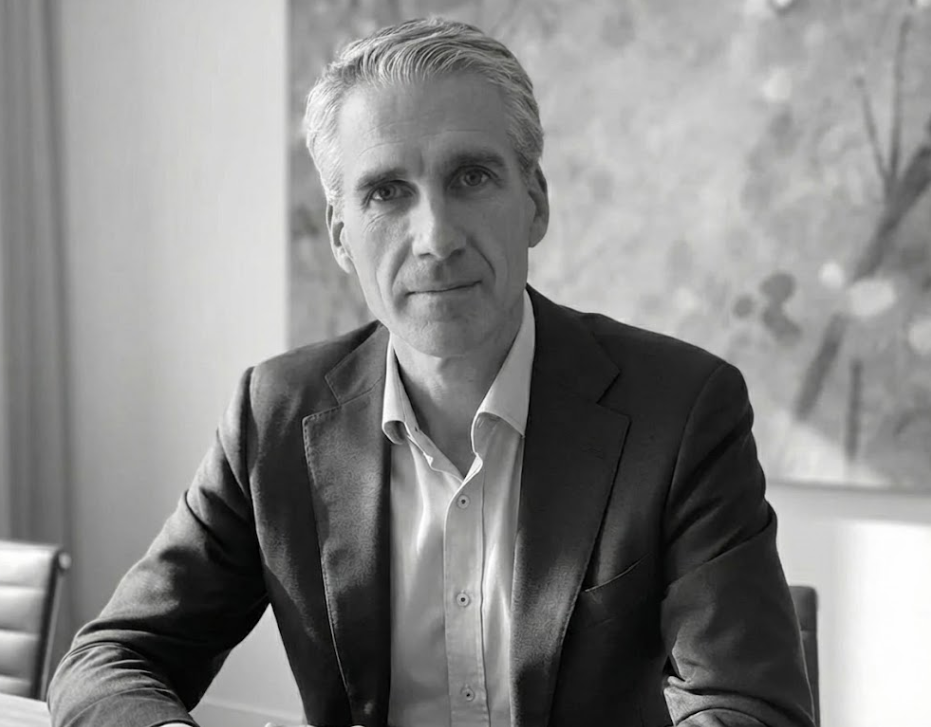
I'm Gerben Bosch. I founded Profitdrive.

For more than twenty years, I worked across operations and finance in services firms at scale. Profitdrive is the product I wish I had when I was working through what breaks the financial thread as firms grow.

Over that time, I held four named roles at Capgemini across operations and finance, spanning Europe and Asia Pacific. I led a business through tenfold revenue growth, integrating multiple acquisitions across different technology ecosystems. More recently, I have worked in an advisory capacity with IT and professional services firms on growth, profitability, and M&A, where the same pattern of financial-thread breakage recurred across firms of different sizes.

3 years

Founder, Bosch CG

Advisory to IT and professional services firms on growth, profitability, and M&A. Working inside these firms is where the same financial-thread breakage recurred across different sizes, and where the case for Profitdrive took shape. boschcg.com

5 years

COO, Capgemini Australia & New Zealand

Managed 2,000+ employees. Led and integrated a succession of large acquisitions: the commercial, operational, and people complexity that follows when services firms absorb other services firms. Optimised utilisation and sales-practice synergy across integrated teams.

2 years

Head of Transformation & Acquisitions, Capgemini

M&A strategy. Identified and appraised acquisition targets. Implemented operating models for acquired businesses.

8 years

CFO, Capgemini Australia & New Zealand

P&L leadership across the region. Team of 20 finance professionals across Australia and India. Procurement and IT oversight. Commercial structuring on large deals: price, cost, cash.

2 years

Management Consultant, Capgemini Consulting

Finance Transformation Practice. Worked on financial system roadmaps and operational transformation across financial services, airline, and telecommunications clients.

Earlier: Deputy CFO at Capgemini Outsourcing (Netherlands), with roles spanning outsourcing financial leadership and sales finance.

How we build

Three principles behind the build.

Profitdrive is early in its life. At this stage, credibility does not come from market scale or customer logos. It comes from the quality of the model, the seriousness of the operating assumptions, and how directly the product says what it does and does not do.

01

Operator-grade depth.

The product is designed by people who have run services firms at scale, and the choices underneath reflect how delivery actually works. A person's cost is dated, so a pay rise counts from the month it applies. A day is a working day, so leave and public holidays come out of capacity. A figure in the outlook opens to the project, the deal and the person and rate behind it.

02

Honesty about stage.

Profitdrive is early in its life. The capabilities reference shows what is built, what is planned, and what is explicitly not in scope. No invented case studies, no borrowed testimonials, no logos that do not represent real customers.

03

One forward model, not reconciled views.

The deal model, the project plan and the firm P&L are built from the same data, so when a deal slips, a project extends or a grade changes, the outlook moves that day. Nobody rebuilds anything, and nobody keeps a second version in a spreadsheet.

Closing

See how Profitdrive works.

The demo is the quickest way to see how the Deal Model and the Outlook work, and whether Profitdrive fits how your firm runs. The demo tenant is pre-populated with realistic data for a 40-person services firm: a forward P&L, deal models, project plans, people cost and the outlook in its three views. It is free and ready to use.

Get the demo link